

Meals Tailor-made For Patient Needs
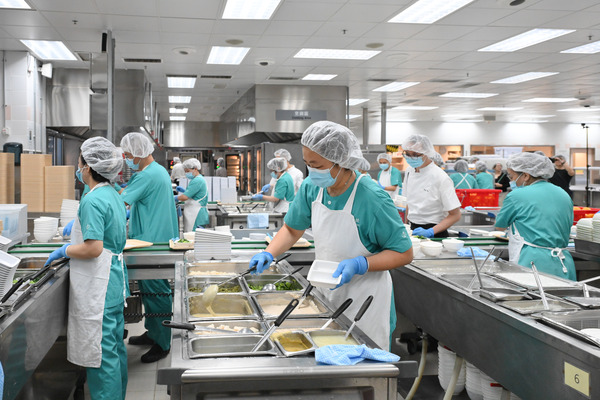
The bustling kitchen of Kowloon Hospital serves approximately 1,400 inpatients per meal.
The menus are designed to take into consideration not only taste and texture but the nutritional needs and swallowing abilities of the patients.
All-encompassing menu
In addition to providing meals for inpatients at Kowloon Hospital, the kitchen also supplies catering services to two nearby facilities: the Buddhist Hospital and the Eye Hospital.
Hospital Authority Kowloon Central Cluster Catering Manager Cora Wong explained that the kitchen’s menu is designed to meet the diverse clinical needs of patients.
“We have a four-week cycle menu that takes care of the nutrient content and also the texture requirement of the patients. We also pay extra attention to the food allergy and the food preference issue of the patients.”
Taste variety
The main kitchen prepares approximately 1,400 meals per mealtime for the inpatients of the three hospitals, serving around 4,200 meals daily.
“To cater for patients with a different therapeutic diet and different texture, we have to prepare 13 different dishes for the entree, including 10 different vegetables and 15 kinds of starchy foods to make the meals for the patients. So, it would be around more than 200 combinations.”
While the chefs are preparing the meals, other staff sort the cooked items, placing them into containers then distributing different dishes onto trays according to each patient's meal ticket before loading them onto meal trolleys for delivery to inpatients at Kowloon Hospital and to the other two hospitals.
Sustainable changes
This year marks Kowloon Hospital‘s 100th anniversary. Ms Wong, who joined the hospital in 2018, has witnessed the evolution of catering services over the years.
She noted that the kitchen previously prepared meals in "family-style" i.e. cooking in bulk and serving directly to the wards, often including congee or minced meat for patients with special dietary needs.
Today, meal plans for diabetics, and high-protein or low-salt options have been introduced to meet different medical requirements. Additionally, various textures, such as minced and pureed diets, are provided to accommodate the clinical conditions of different patients.
To enhance dietary quality, the hospital gathers patient feedback on meals and replaces 20% of the menu annually to maintain variety. However, before any menu changes, professional input has been sought from various departments, including nutritionists and speech therapists.
Dietary assessments
Speech therapists will assess the food texture, size and the patient's oral function, co-ordination, swallowing ability and mental state necessary for managing the new dish. Based on this evaluation, they will recommend appropriate diet types that can include the new dish.
During festive periods, the hospital prepares special dishes for inpatients, which also require assessment by speech therapists.
Kowloon Hospital Speech Therapist Himmy Chow cited an example of one festive meal: “The custard bun we prepared for our Mid-Autumn Festival requires a certain level of chewing and oromotor co-ordination, therefore it is only suitable for patients who are on regular diets and soft diets.
“And for the sago pudding, it is softer in texture and requires less chewing, therefore in addition to regular and soft diets, it can also be included in shredded, minced and smooth soft diets.”
Firefighters Upgrade Gear And Training
A new generation of breathing apparatus has hit the frontlines of Hong Kong’s fire services, marking a significant t... Read more
Archiving HKs Cinematic Heritage
During the 1980s and 1990s, Hong Kong became established as a film-making powerhouse, earning the nickname “Hollywoo... Read more
Inspiring Youth In Cultural Heritage
A guitar shredding through neon streets and a delicate ink-wash mantis stepping across drawing paper are making an unl... Read more
Building Smarter, Faster In Hong Kong
Facing a chronic labour shortage and soaring construction costs, Hong Kong’s infrastructure sector is turning to adv... Read more
Media Interns Take Stage In Hunan
Navigating career options amid rapid transformation in the media industry presents a tough choice for communication st... Read more