
Reducing Plastic Use Starts From Brands: Green Group
"); jQuery("#212 h3").html("

"); });
2022-06-05 HKT 15:02
Share this story


A green group on Sunday has urged businesses to shoulder most of the responsibility to tackle plastic pollution in Hong Kong.
The Green Earth made the call on World Environment Day, a day set by the United Nations for encouraging worldwide awareness and action to protect the environment.
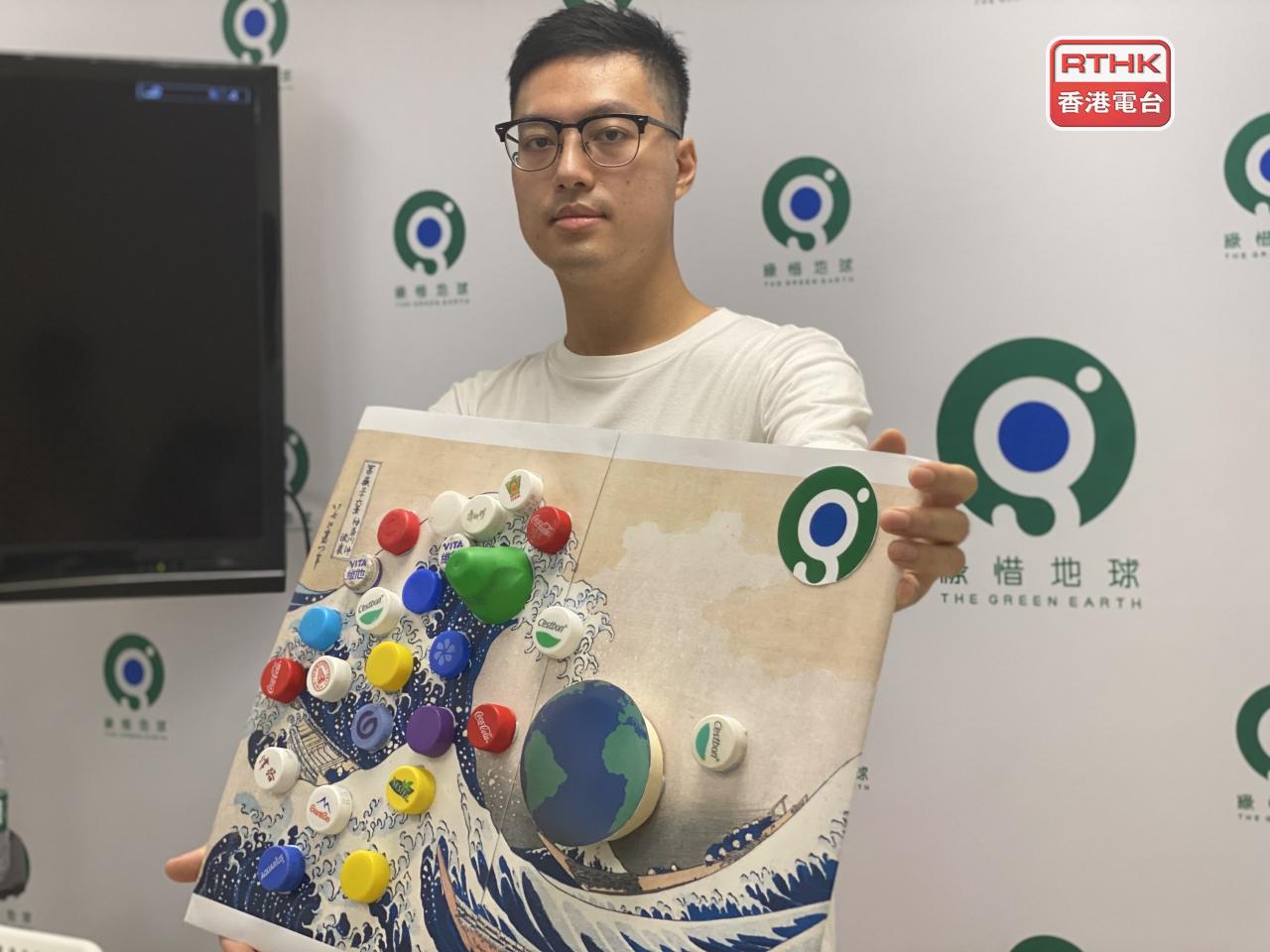
After conducting 116 coastal clean-ups across the territory from November 2020 to November 2021, the Green Earth said it collected more than 43,000 plastic bottles.
Of some 36,000 bottles whose brands could be identified, those featuring traditional Chinese characters – suggesting they were made locally – and those with simplified characters suggesting they were made in the mainland each accounted for about half.
The group's senior project officer, Edmond Lau, said reduction in the use of plastic should start from brands.
"At the source, they were the one, the strongest stakeholder to decide whether the beverages be contained in a plastic bottle, or in other kinds of single-use disposable containers, or to provide plastic-free purchase options, which is the one that green groups [are] always preaching for," he said.
"Right now, there is a platform called 'Drink Without Waste', mainly led by the brands in Hong Kong, and that they have set a 2025 [recycling] target of 70 to 90 percent. I doubt that and I'm so worried that [whether] they can do it, but as long as they have set out a target publicly, they should be held responsible to execute that and show that they are a responsible company."
Lau said local and mainland authorities should also set out reduction and recycling targets, so as to rein in marine garbage.
Last year, the Environmental Protection Department launched a three-month public consultation on the Producer Responsibility Scheme on Plastic Beverage Containers, under which the government proposed a 10-cent rebate to encourage the recycling and return of plastic bottles. But the Green Earth called for a higher rebate of HK$1 per bottle, saying it could boost the recycling rate in the city to more than 70 percent.
"It does not hurt citizens' wallet, because when they return or recycle their bottles, they can get their deposit value that is HK$1, or whichever higher, back into their account," Lau said.
Lau also suggested authorities to reference South Korea in introducing a penalty tax to companies when they could not meet their own recycling target.
Democrat Candidate In Key Senate Race Reiterates Cost-Of-Living Message Ahead Of Midterms, Dismisses 'Faith'-Related Attacks
Abdul El-Sayed, who is running for Senate against Republican Mike Rogers in Michigan, said that his opponent's only stra... Read more
Sanders Calls For Criminal Prosecution Of AI CEOs After Model Submitted A False Homicide Tip To Police
Two-time presidential candidate Bernie Sanders made the statement after news emerged that an Anthropic AI model sent the... Read more
Palestinian Authority Postpones Elections, Citing Israeli Restrictions. Israel Denies The Charges.
Palestinian President Abbas said that long-awaited legislative elections, due to be held in November, would be postponed... Read more
Riyadh Airport Evacuated After Houthi Strike. This Is The Latest In A Series Of Attacks Against Saudi Aviation.
The Houthis hit Terminal 3 of the King Khalid International Airport of the Saudi capital of Riyadh on Saturday, just day... Read more
Meme Coin Rug Pulls Keep Burning New Buyers: $MT Launchpad Now Publishes Their Code First
Rug pulls keep costing meme coin buyers. Launchpads like MemeToro now publish their contract code first. Here's what to ... Read more
U.S.-Russia Diesel Agreement Angers Zelensky. Russia Attacked After The Deal Was Announced.
The Ukrainian leader called the agreement between Moscow and Washington, which will see hundreds of thousands of tons of... Read more