

Bringing HK People Home
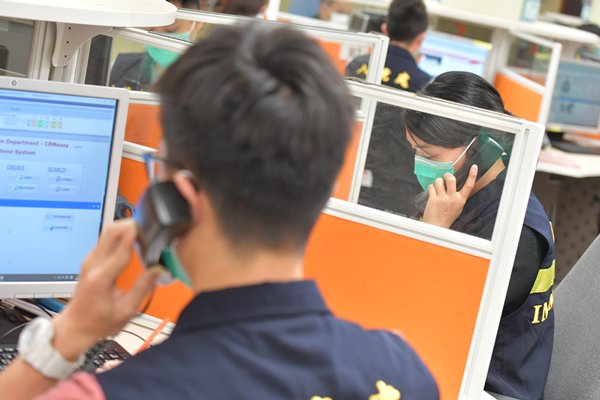
Due to the COVID-19 pandemic, several countries implemented flight restrictions or immigration control measures that made it impossible for many Hong Kong residents to get home. Some were stranded in places rarely heard of.
That is why the Assistance to Hong Kong Residents 24-hour Hotline (852) 1868 - operated by the Immigration Department - has been used by thousands of people as their way out since January.
Race against time
Senior Immigration Officer Leung Hing-wah and his colleagues have been working tirelessly since the pandemic began. They have one particular goal in mind: bringing Hong Kong residents home safely.
The unit has received more than 15,700 requests for assistance via phone calls and emails as at June 24. During its peak time, more than 400 cases were recorded in an hour.
“Whenever we receive a request for help, we have to contact the Chinese Embassy or related institutions in that country to comprehend the latest epidemic situation. At the same time, we reach out to different bureaus to see if we can arrange flights to bring back stranded residents,” Mr Leung explained.
“If we are not able to evacuate them in a short period of time, we have to see what we can do to help them there.”
Leung Hing-wah joined the department’s Assistance to Hong Kong Residents Unit in 2016. Since then, he has participated in different large-scale rescues in Japan that include the earthquakes in Kumamoto and Hokkaido as well as the aftermath brought by Typhoon Jebi.
With previous rescue experience under his belt, Mr Leung played an integral role in the operation to bring home Hong Kong residents stranded on the Diamond Princess cruise ship in Japan.
“It was a different challenge handling stranded Hong Kong people when I was in Japan. I helped to solve lots of problems - from getting them suitable food to communication issues. More importantly, I was able to provide emotional support after I gained more perspective by walking in their shoes.”
He added that this was the most memorable operation for him so far.
Three chartered flights were arranged and eventually brought around 200 people home. Some rescued passengers were so grateful that they presented a plaque dedicated to the unit and praised the Government’s efforts in helping them.
Dedicated heart
Apart from Japan, the department also co-ordinated flights for Hong Kong residents stranded in places like Wuhan, Peru, Morocco, India, Pakistan, Nepal and Bangladesh.
In order to run these operations smoothly, personnel at the Immigration Headquarters are equally important.
They have to take care of every detail, like providing information on how and when to get to the airport and arranging transport for Hong Kong people.
Given the COVID-19 workload has been so massive, the department had to set up a special command centre on another floor of the headquarters to add more staff.
Chief Immigration Officer Kwong Wai-yin said at least 500 people were deployed to the unit - in addition to the 26 authorised personnel - to help answer phone calls, reply to emails or work abroad.
A similar arrangement was in place for the Great East Japan Earthquake that stuck Japan in March, 2011, she recalled, but the number of people involved is much higher this time because of the unprecedented pandemic situation.
“As the supervisor of this unit, I am especially grateful for each colleague who works here. Without a concerted effort, it would be impossible to solve all the problems we face effectively.”
Keeping pace
During the epidemic, Ms Kwong noticed that the channels through which to seek help have advanced a lot from a decade ago.
“Smart phones were not popular back then, but they are everywhere nowadays. We are now studying the possibility of using various phone applications, special emails or communication software for Hong Kong citizens to contact us, apart from making international direct dialling calls down the road.”
She hopes that by utilising the latest technology, the unit will be able to keep up with the pace and at the same time ensure the department assists everyone who needs help.
Inspiring Youth In Cultural Heritage
A guitar shredding through neon streets and a delicate ink-wash mantis stepping across drawing paper are making an unl... Read more
Building Smarter, Faster In Hong Kong
Facing a chronic labour shortage and soaring construction costs, Hong Kong’s infrastructure sector is turning to adv... Read more
Media Interns Take Stage In Hunan
Navigating career options amid rapid transformation in the media industry presents a tough choice for communication st... Read more
District Governance: Estate Upgrades Put Focus On Well-being
On a hot summer’s day, elderly residents sit chatting under the shade of some large trees – a simple scene of comm... Read more
CM Hospital To Offer Targeted Care
Several years ago, Mr Lai suffered a mini-stroke that turned his daily life into a constant battle against physical di... Read more